Twenty activations from a benchmark audit
A corporate-mandated audit had benchmarked the brand sites against the Baymard research library. What came back was a benchmark, not a plan: 650 guidelines and a pile of scores, with no way for a brand team to know which applied to them or what to change on Monday.
Led the insights work that turned the benchmark into an activation playbook: which twenty guidelines mattered most for our patterns, what each meant inside our own CMS, and how we would know whether it worked.
- Filtered 650+ guidelines to the twenty with the most impact on our patterns
- Scored every one for level of effort so teams could sequence rather than stall
- Audited seven global brands against all twenty and published the matrix
- Wrote the CMS route for each change, not the principle behind it
- Baymard Institute research library
- Fullstory behavioral analytics
- Brand-by-brand site audits
Every brand, every activation,
on one page
A column that is red all the way down is a platform problem. A row that is red across is a brand problem. Putting both on one grid is what stopped the conversation from being about whose fault it was.
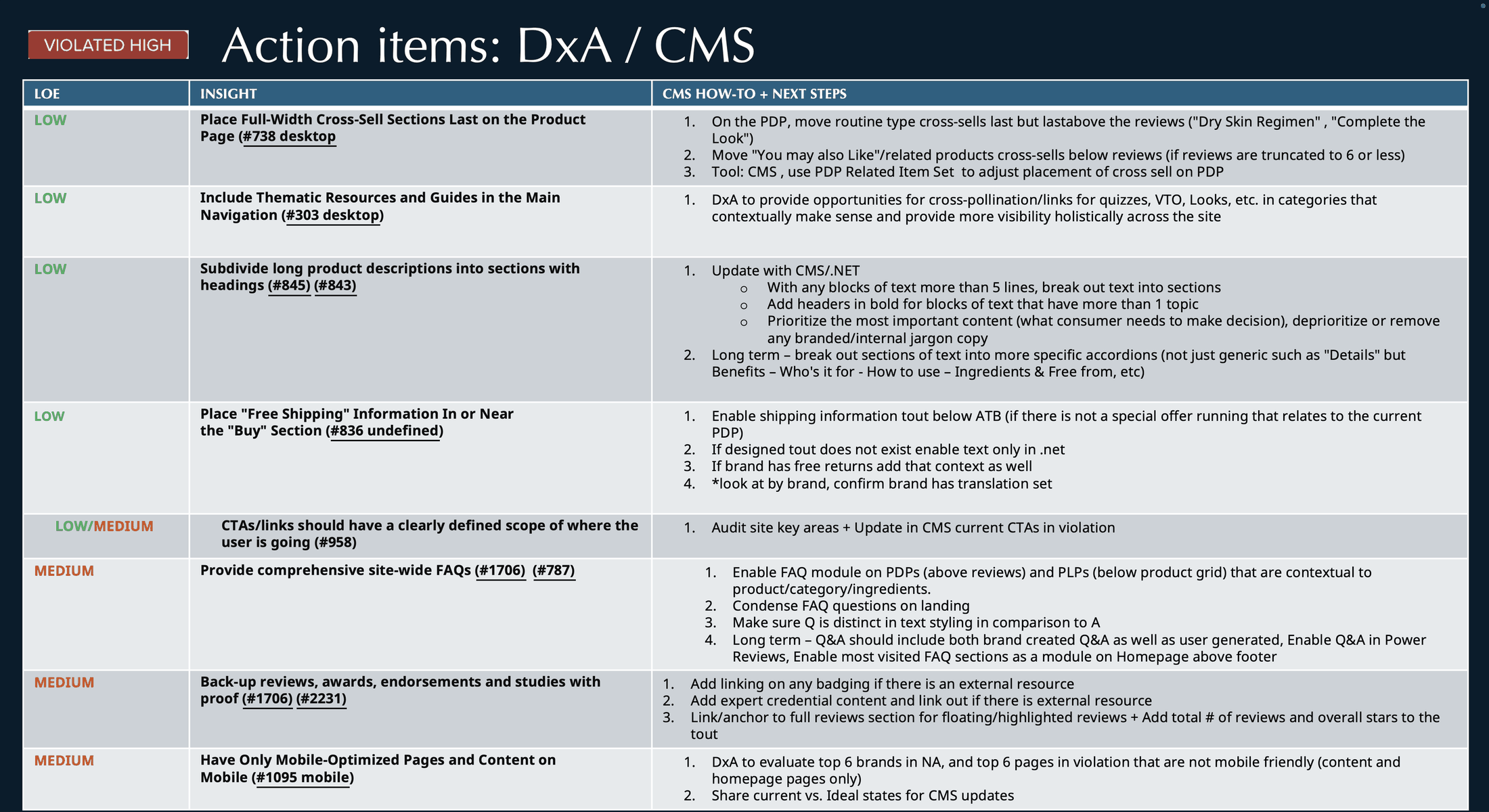
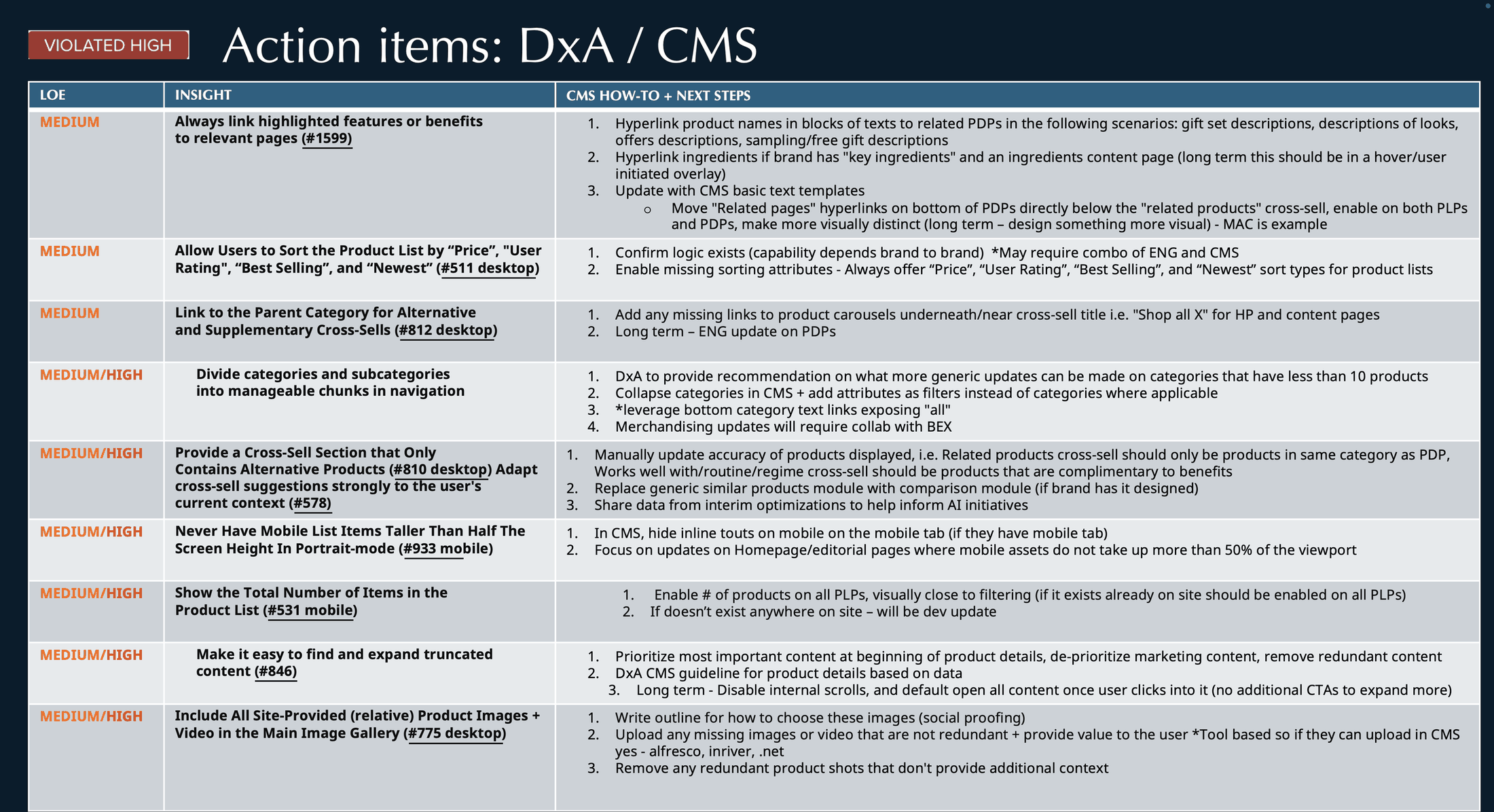
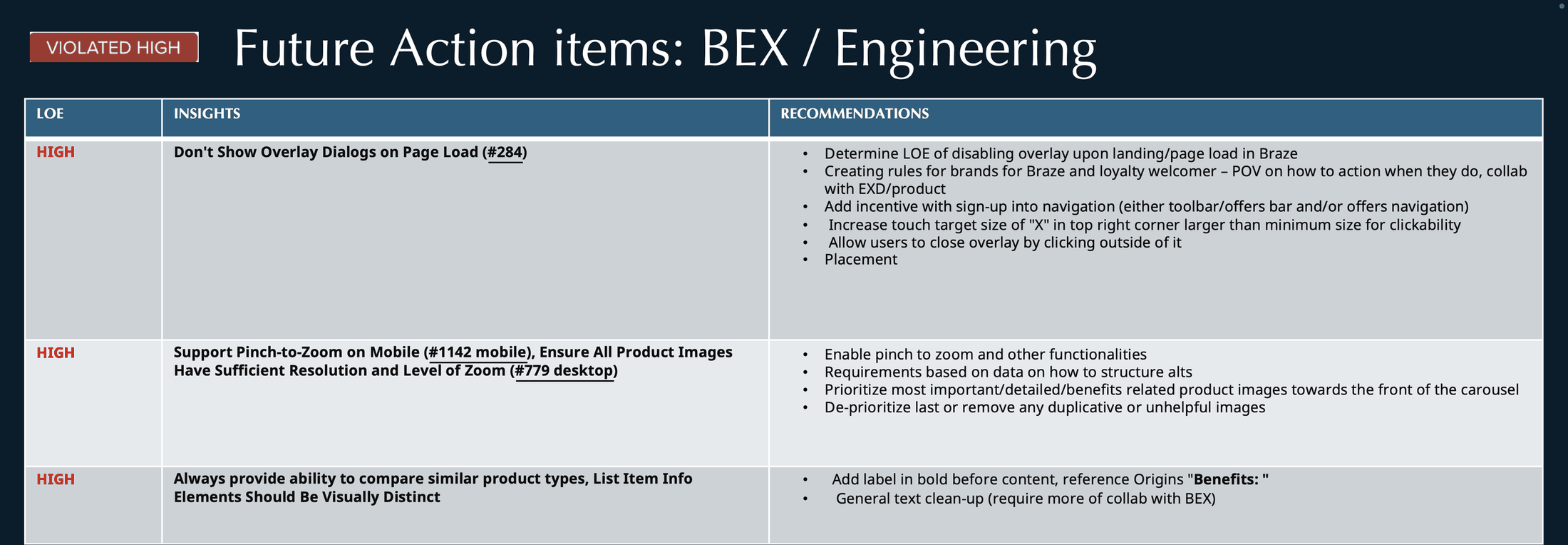
Twenty rows. Each one written
as a CMS instruction.
The tracker was the deliverable. Effort on the left so a team could sequence, the guideline in the middle, the route through our own tooling on the right. Nobody had to interpret a principle.
Each activation carried its own
proof and its own success test
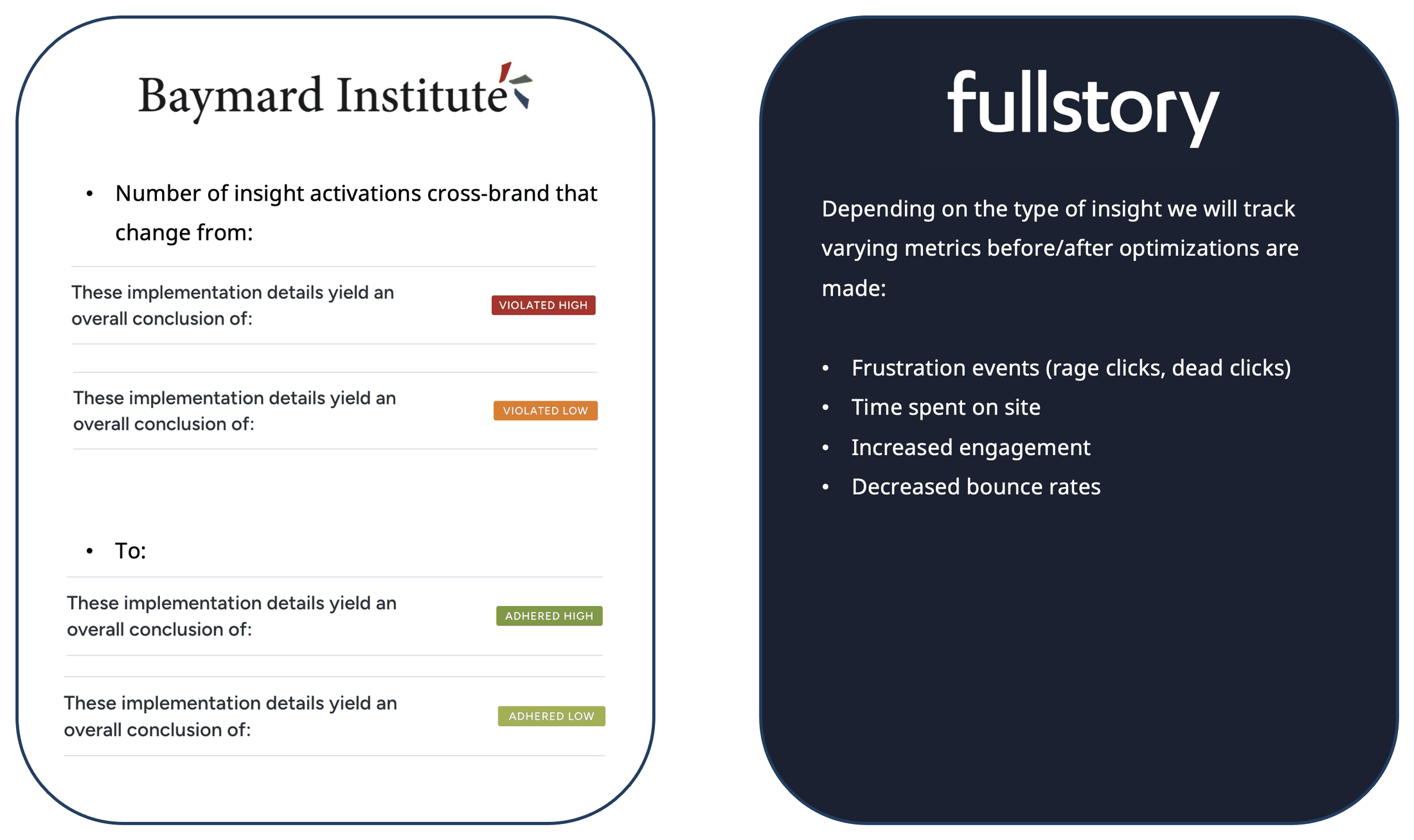
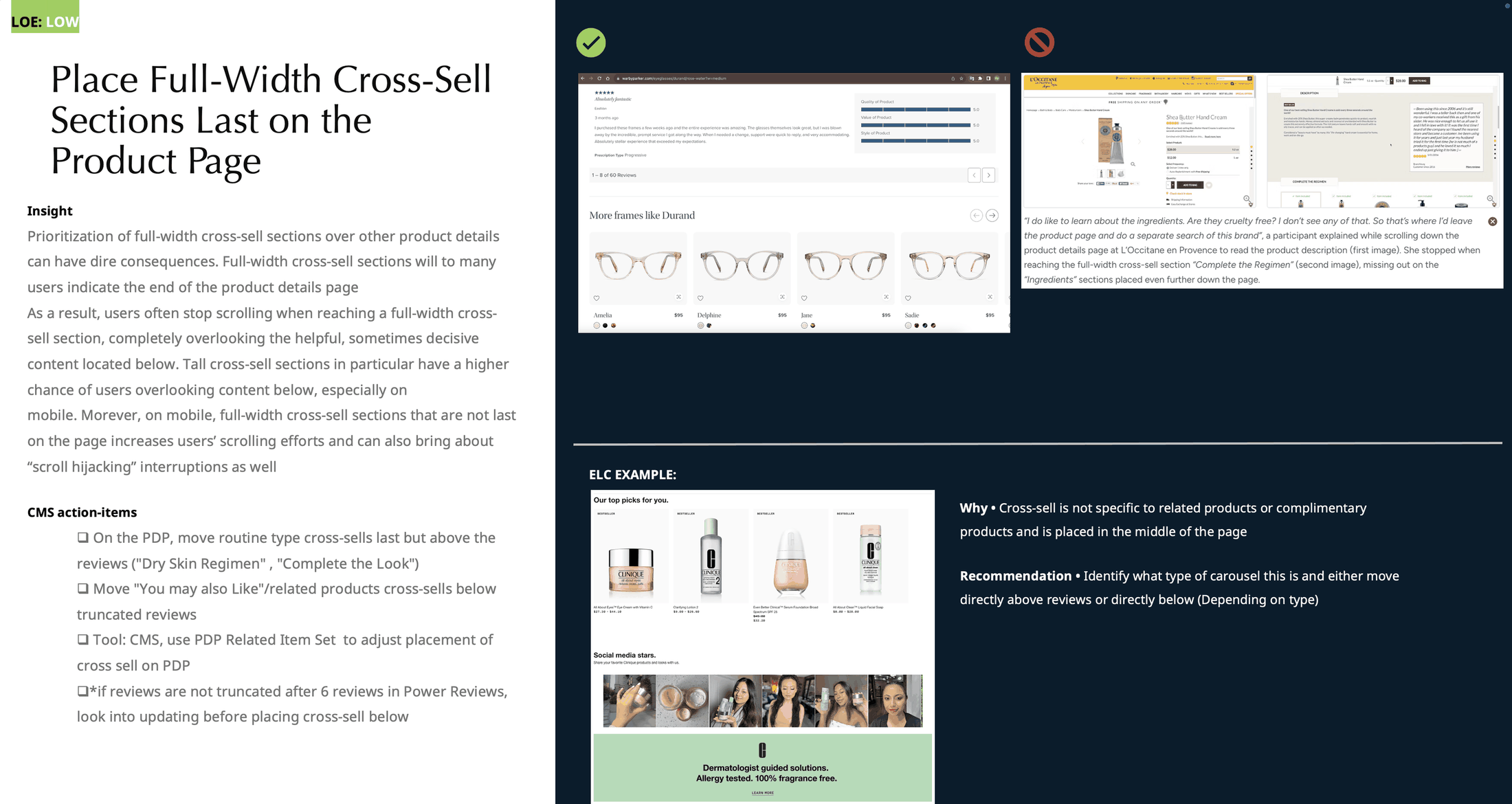
Every guideline was written up the same way: the behavior, an example of the pattern working elsewhere, our own version of the failure, and the specific change. Then a defined move from violated to adhered, with behavioral metrics attached before anything shipped.
An audit says where you stand.
This said what to change, in what
order, and how you would know.
Each activation written as a CMS instruction rather than a principle. Move the routine cross-sell above reviews. Break any text block over five lines into headed sections. Put shipping information below add-to-bag.
Four effort tiers. The low tier was entirely CMS work, so brands with no engineering allocation could still ship against it in the same quarter.
Frustration events, rage and dead clicks, time on site, engagement, and bounce, tracked in Fullstory before and after each change and reported by activation rather than by brand.
This engagement is available as a scoped package: Experience audit.
See services and rates