07

Activating a licensed platform across a portfolio

Enablement · MerchandisingEstée Lauder Companies
UX ResearchExperience StrategyProduct & Design LeadershipAI & Insight Systems
The problem

Twelve brands were licensed on the same user-generated content platform and using perhaps a third of it. Galleries sat on product pages as decoration, headers read like ads, and new launches shipped with empty widgets. The capability was paid for. It was not activated.

My role

Led the insight and recommendation layer of the merchandising playbook, translating platform capability and performance data into a prioritized action set that brand teams could run without a specialist in the room.

Approach
  • Audited how all 12 brands were actually using the platform against what it can do
  • Pulled performance data and outside benchmarks for each proposed change
  • Grouped everything into three areas: content management, product page optimization, cross-channel collaboration
  • Scored every recommendation for level of effort before it went out
Data sources
  • Platform analytics and monthly reporting
  • Fullstory behavioral analytics
  • Optimizely testing
  • Nielsen Norman Group usability research
Brands
12
Running the platform globally across markets and languages
Recommendations
11
Each with named actions and a level-of-effort score
Focus areas
3
Content management, page optimization, cross-channel
Low effort
6
Of the eleven, actionable without engineering work
Most of what the brands needed was already licensed and switched off. The work was making the case for turning it on, in an order somebody could act on.
/ What the evidence showed
07 / UGC merchandising

Placement and naming moved
the numbers, not more content

Every recommendation had to carry evidence, from our own before-and-after data where we had it and from outside benchmarks where we did not.

Adding galleries to category pages
One brand, four weeks before against four weeks after, autumn 2024
CVR after
5.70%
CVR before
2.23%
Units after
446
Units before
179
2,713 unique shoppers interacted with the new category-page galleries in the first month, and 161 of them converted. The content had been sitting in the library the whole time. It was on the wrong pages.
Fallback galleries
+42%
Higher conversion when shoppers engaged with UGC on products that had none of their own, served related content instead of an empty widget
Multiple products in view
19% / 9%
Click-through to product pages with several items tagged in one image, against a comparable retailer showing one
Naming the gallery

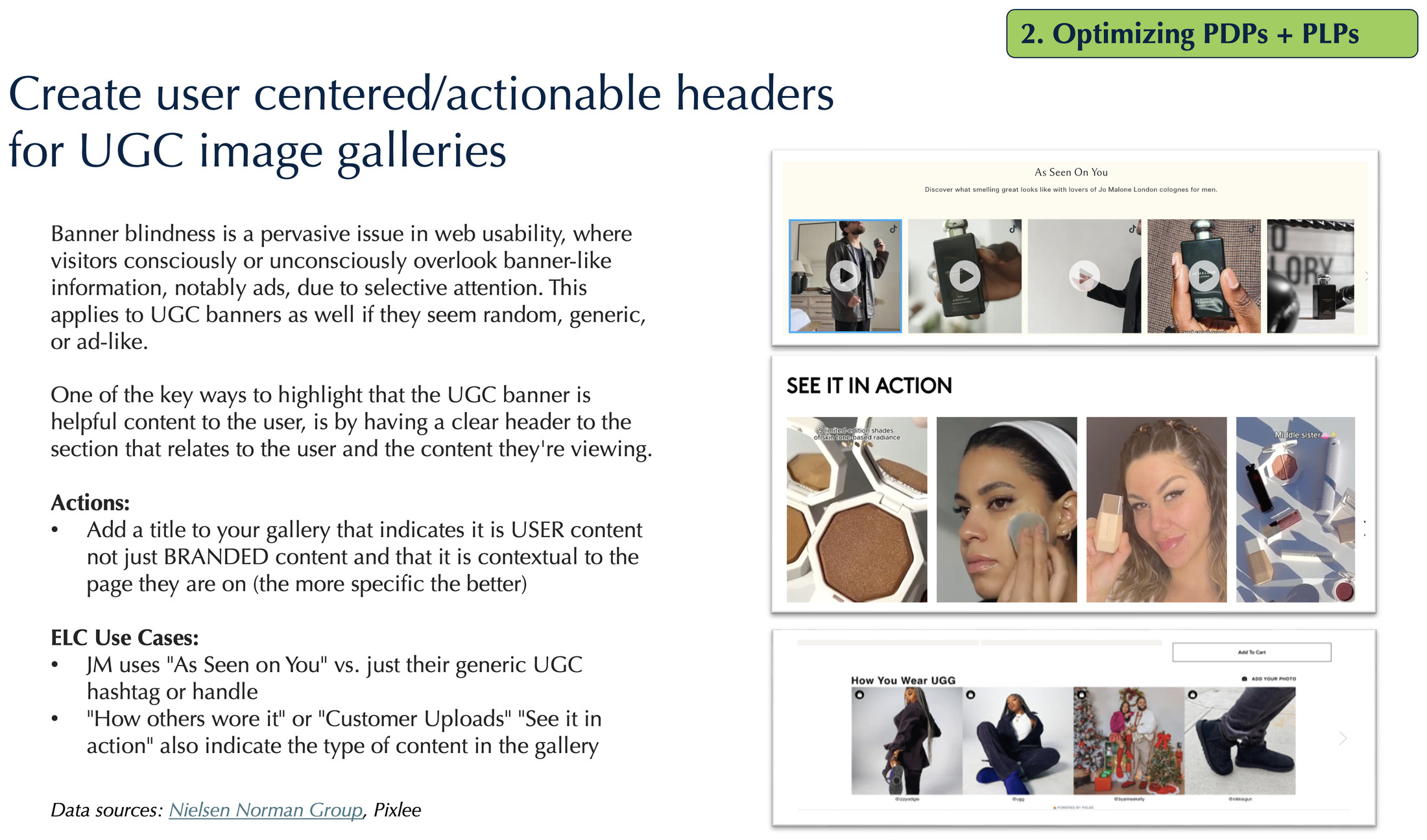
Banner blindness applies to user content too. A gallery headed with a bare campaign hashtag reads as an ad and gets skipped. Headed "As seen on you" or "How others wore it" it reads as help, and tells the shopper what they are looking at.

/ The playbook
07 / UGC merchandising

Eleven recommendations, each with
its actions and its effort score

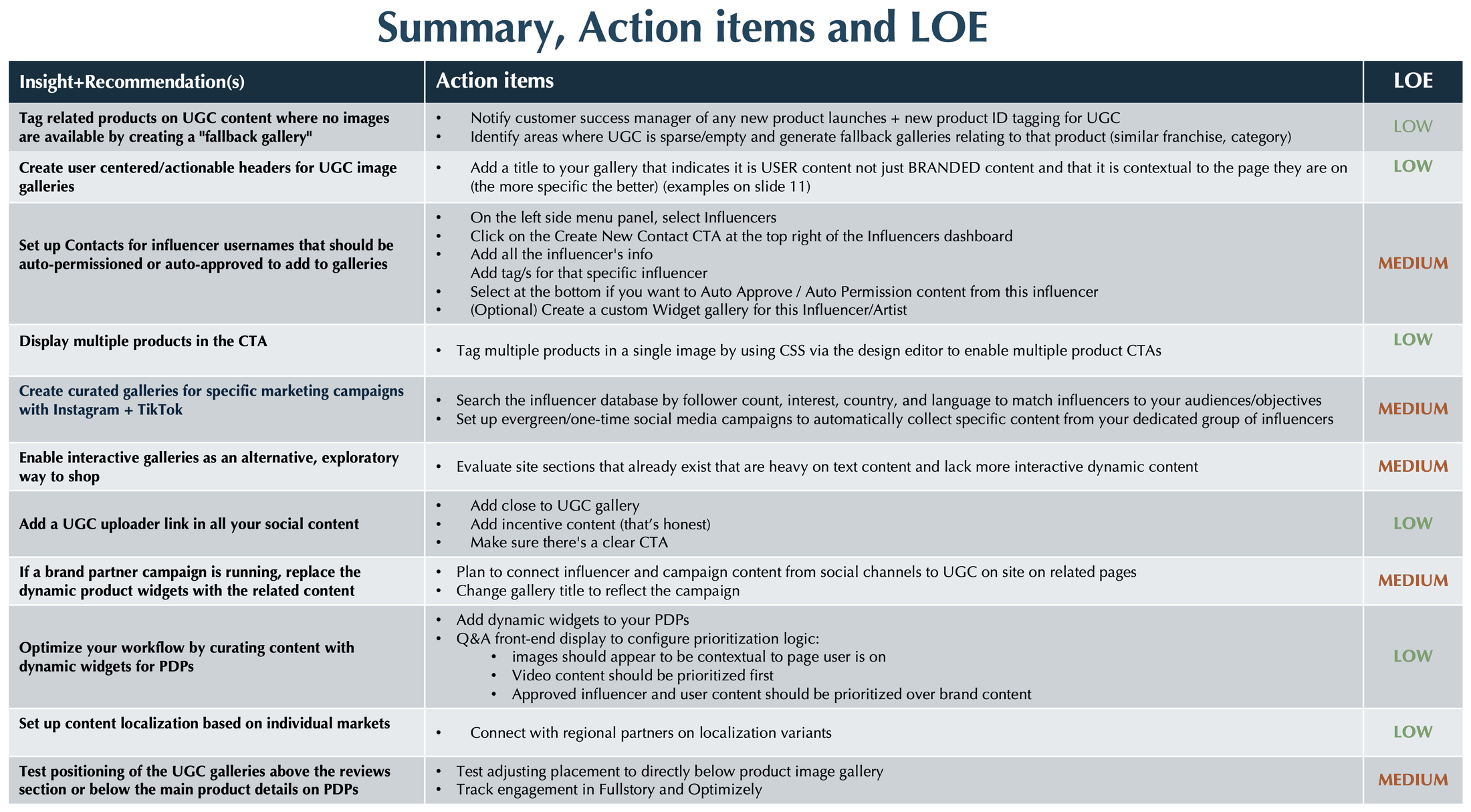
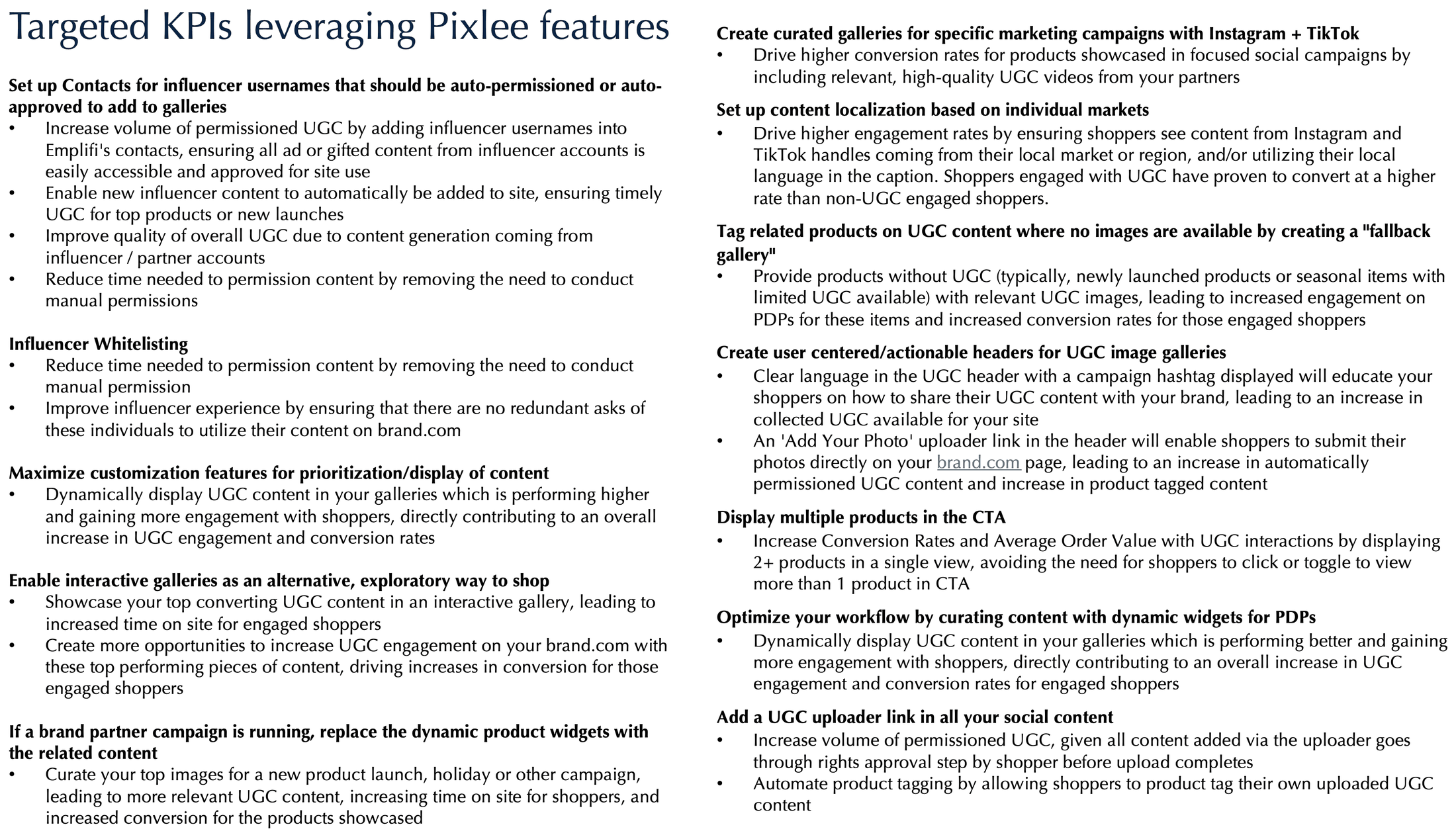
One table, sorted so a brand manager could find their own capacity on it. Then a second pass naming what each recommendation was supposed to move, because a list of good ideas with no stated outcome is a wish list.

Summary table of eleven UGC recommendations, each with its specific action items and a level-of-effort score of low or medium
What to doSix low effort and five medium. Nothing in the list required engineering time, which is why the low tier could start the same week the playbook landed.Open full size
Each UGC recommendation mapped to the specific KPI it was expected to move, from permissioned content volume through engagement, conversion and average order value
Why it should workEvery recommendation tied to the metric it was meant to move. Fallback galleries to engagement and conversion on new launches. Whitelisting to permissioning time. Multi-product tagging to order value.Open full size
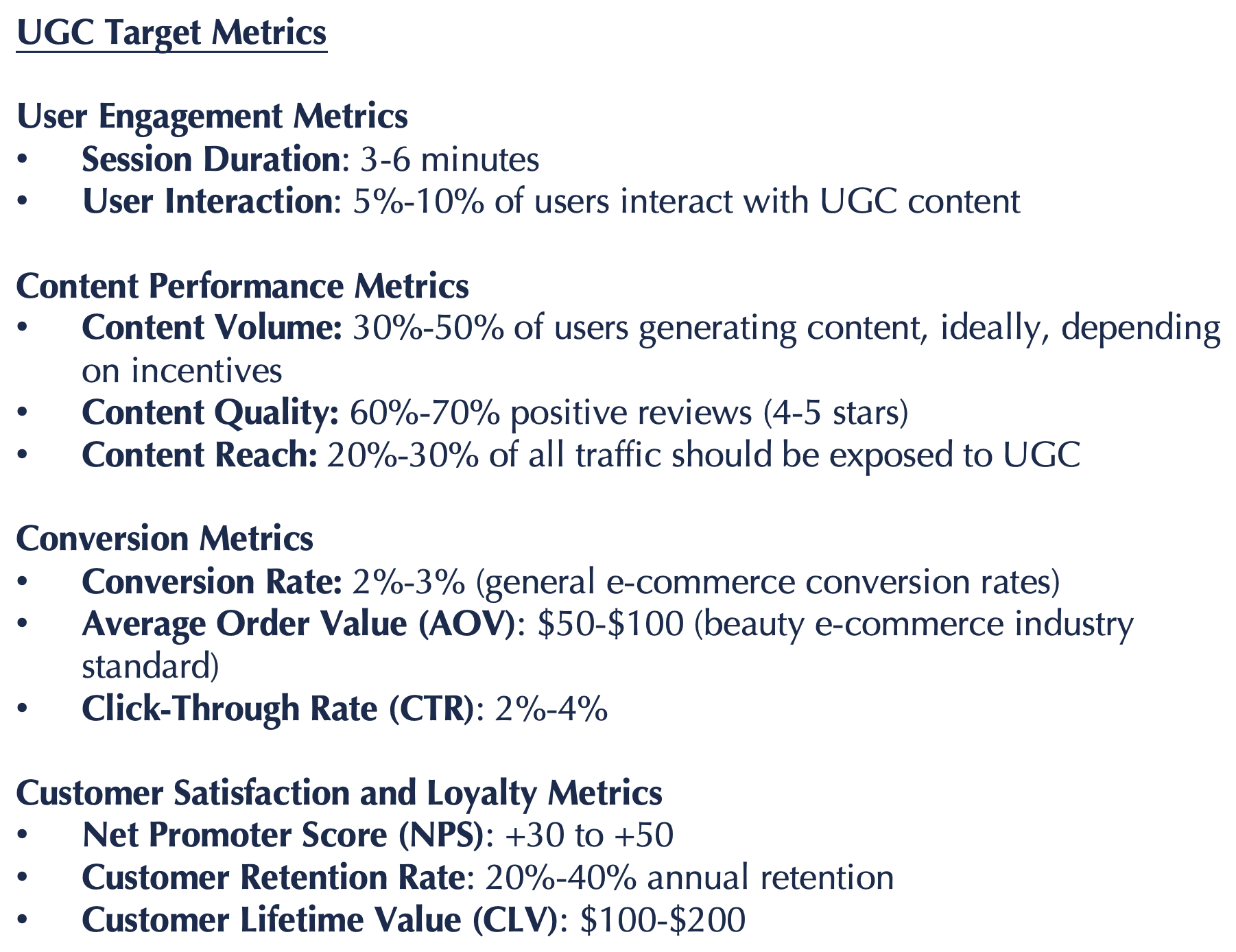
Target ranges for UGC performance across engagement, content, conversion and loyalty metrics, including session duration, content reach, conversion rate and average order value
What good looks likeTarget ranges written down in advance across engagement, content, conversion and loyalty, so a brand could tell a working gallery from a decorative one without asking.Open full size
The effort score did more work than the ranking. A brand with no development capacity could still find six things to do, which meant nobody had a reason to file the whole thing.
/ Inside a recommendation
07 / UGC merchandising

Specific enough that nobody
had to interpret it

Each recommendation was written the same way. The behavioural reason it matters, the exact action, and where in the platform to do it. Down to the menu item, when that was what the answer required.

The gallery header recommendation: banner blindness explained, the action to name a gallery for the user rather than the campaign, and three live examples of headers that tell a shopper what they are looking at
Naming the galleryThe cheapest change in the playbook and the one with the clearest research behind it. A gallery headed with a campaign hashtag reads as an ad. Headed for the shopper, it reads as help.Open full size
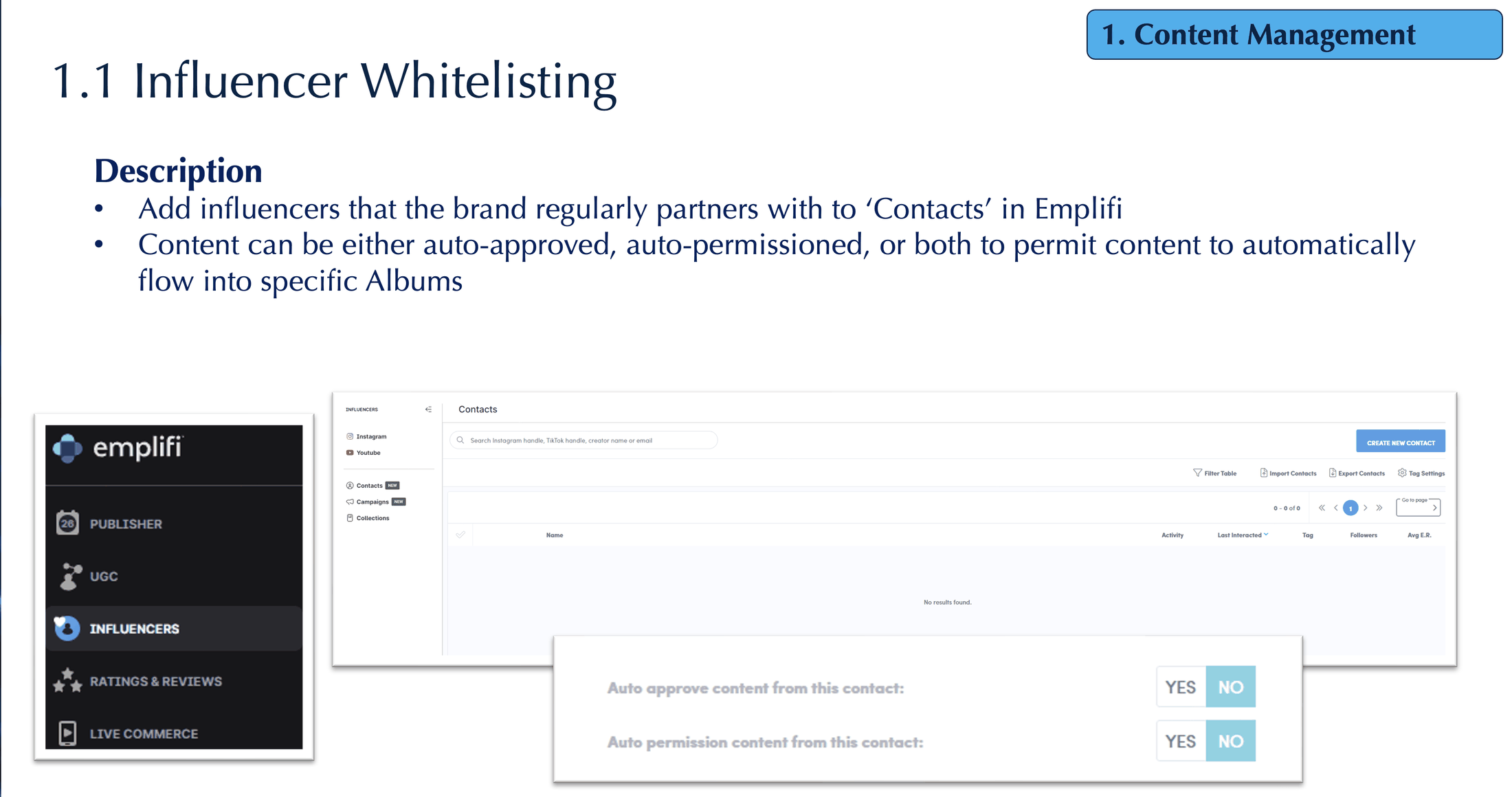
The influencer whitelisting recommendation, showing the platform navigation and the auto-approve and auto-permission settings on a contact record
WhitelistingA licensed feature nobody was using, shown at the level of the two toggles that turn it on. This is what removed a manual permissioning step from every campaign.Open full size
Writing to the level of the toggle is the difference between a recommendation and an instruction. It also surfaced how much of the platform was already paid for and switched off.
/ What it produced
07 / UGC merchandising

A playbook a brand team
could run on their own

The deliverable was not a readout. It was an operating document with three parts, each answering a question a brand manager would otherwise have to find someone to answer.

01 What to do, in what order

Eleven recommendations, each with the specific actions underneath it and a level-of-effort score. Six were low effort, which meant a brand with no engineering time could still move.

02 How to tell if it worked

A measurement spec naming the four platform metrics that matter, attributed conversion, widget interactions, lightbox opens, and click-throughs, paired with target ranges and a Fullstory dashboard to track engagement and placement tests.

03 Who to go to

A routing table for the things brands kept getting stuck on: standing up a new brand, adding a region, changing curation rules, or pulling performance data. Process and owner for each.

Same test as everything else here. Can somebody act on this without me in the room?