Reading a cultural shock in real time
In-store experience halted globally within weeks. Digital demand surged across the portfolio overnight, and the things that actually differentiated the brands, consultation, sampling, education, and shade matching, had no digital equivalent. Competitors were shipping responses daily and nobody could tell which moves were signal and which were panic.
Directed the cross-brand UX audit and competitive intelligence initiative across the portfolio, delivered as a 112-page executive research report organized into 17 feature and function categories.
- Scanned 50+ brands, inside the portfolio and well outside the category
- Logged every example as an observation, a recommendation, and an open question
- Mapped in-store value drivers to their digital equivalents
- Built a cross-brand gap model to sequence rollout
- UX audit and heuristic analysis
- Fullstory behavioral analytics
- Competitor, social, and CRM monitoring
Behavior shifted toward
human support and purpose
Three gaps the portfolio
was losing ground on
Gap: inconsistent communication brand to brand. Opportunity: one reusable sitewide module every market and brand could deploy.
Gap: customer service absorbing the cost of shipping delays. Opportunity: proactive logistics messaging before the contact happens.
Gap: live services fragmented across brands and vendors. Opportunity: a centralized experience hub rather than nine separate builds.
Eight of seventeen categories
had no portfolio example at all
Counting the report's entries by where each example came from turns the scan into a gap model. The first nine categories were things our brands already did somewhere. The last eight existed only outside the portfolio. The largest, live video consultation, had twelve competitor examples and none of ours.
The two entries that changed
what we thought to ask
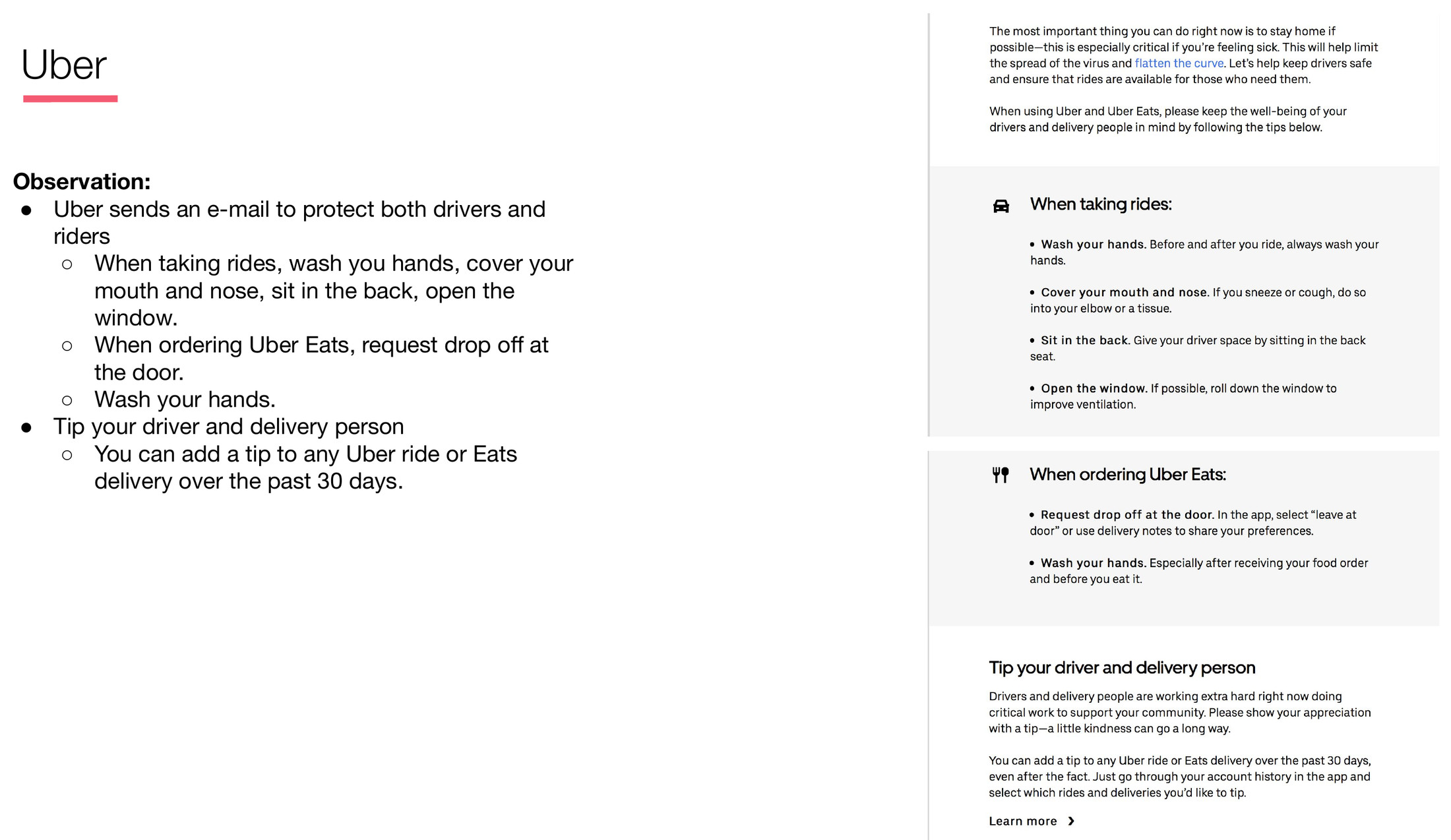
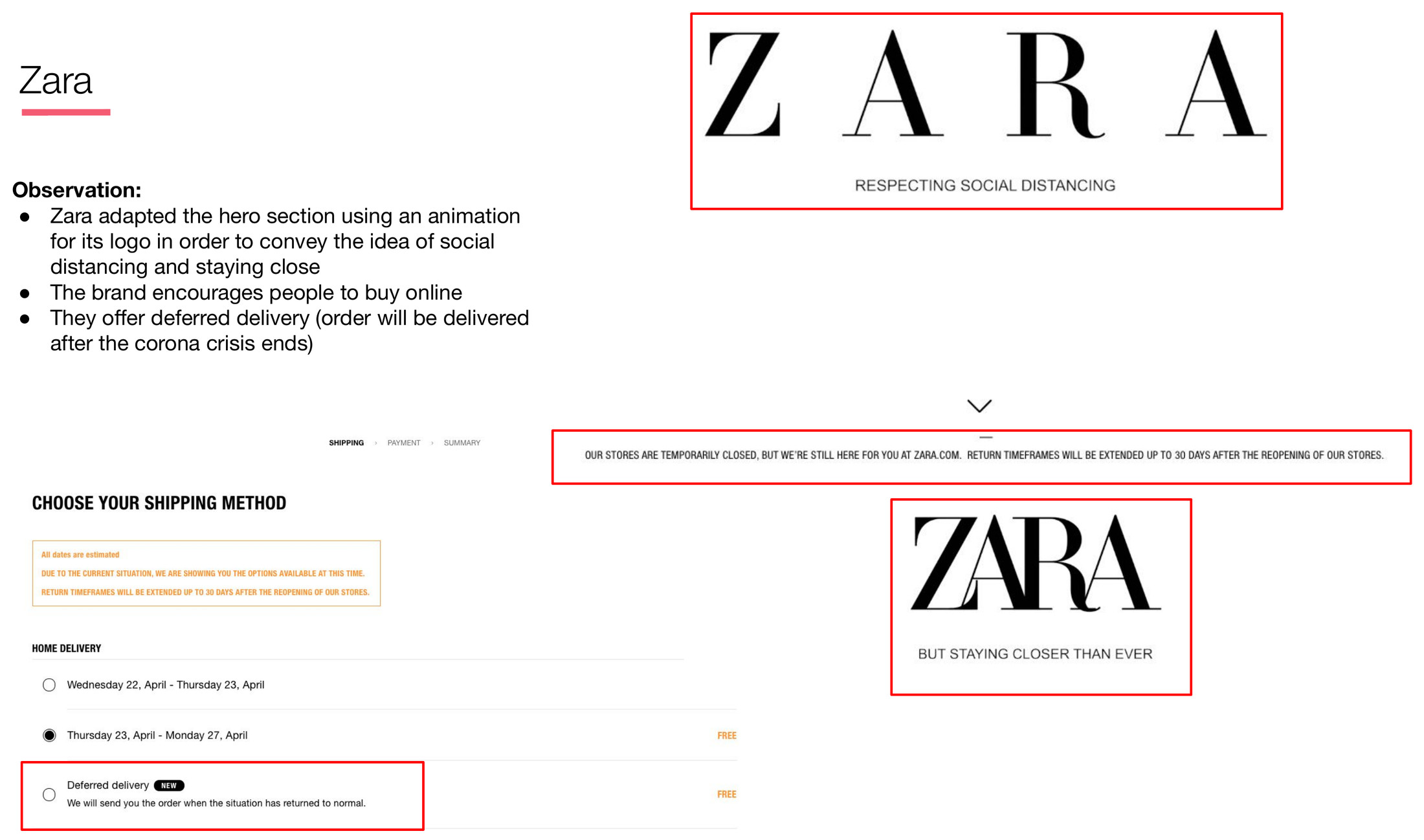
Neither is a beauty brand, and a scan of the category would have surfaced neither. A rideshare company writing safety instructions into a transactional email. A retailer offering to hold your order until the crisis ended. Both answered a question our brands had not framed yet.
The report ended in three
lists, not one appendix
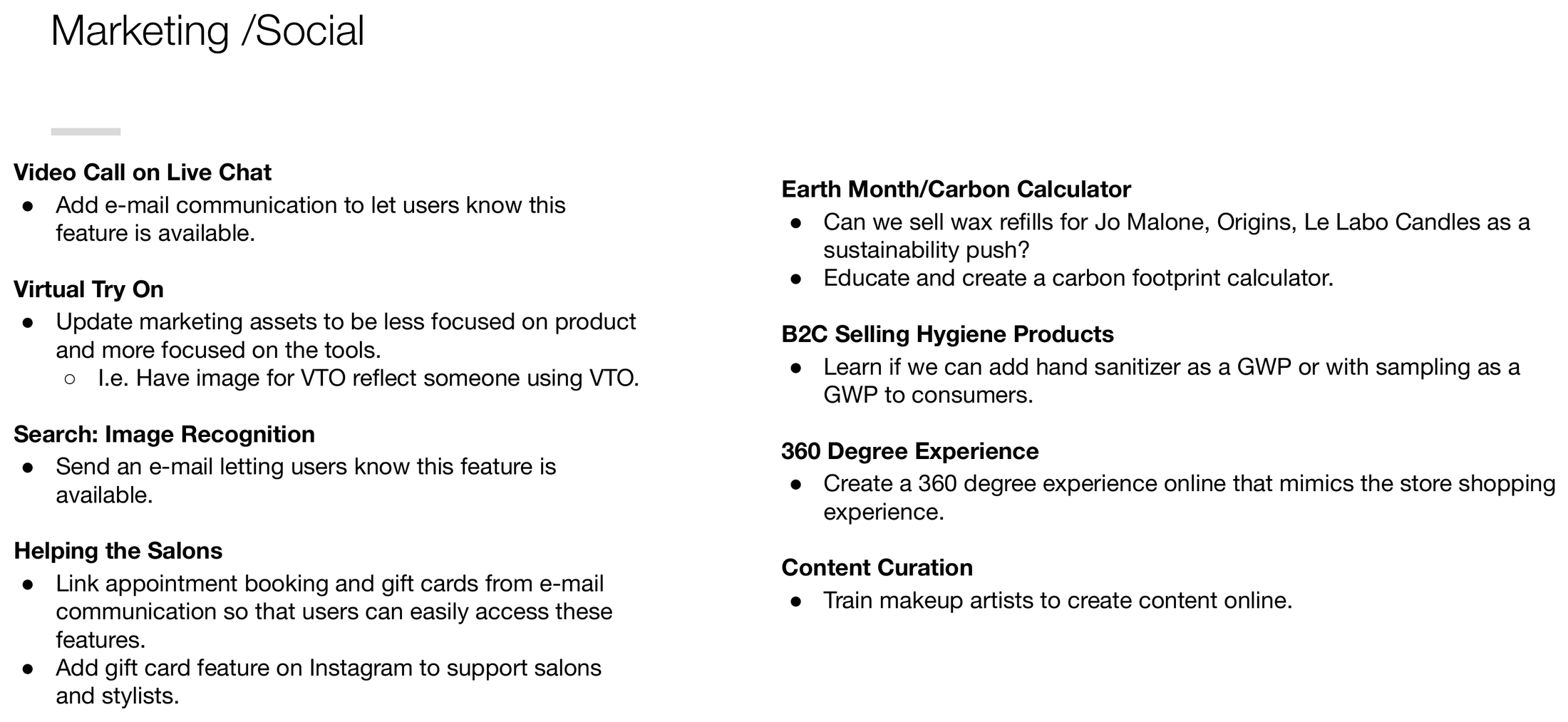
Every recommendation was rewritten under the function that had to act on it. A product manager reading the last three pages sees only what is theirs, phrased as something they could take into sprint planning.
A scan is a list.
This was built to be acted on.
Competitive research usually arrives as a folder of screenshots and dies there. Two structural choices stopped that.
Observation, recommendation,
open question
- Observation. What the brand actually did, in plain terms
- Recommendation. What we should do about it, specific enough to scope
- Open question. What we would need to know first. Do we have analytics on this. Which vendor powers it. Which other brands are about to launch the same thing
Three functions,
not one appendix
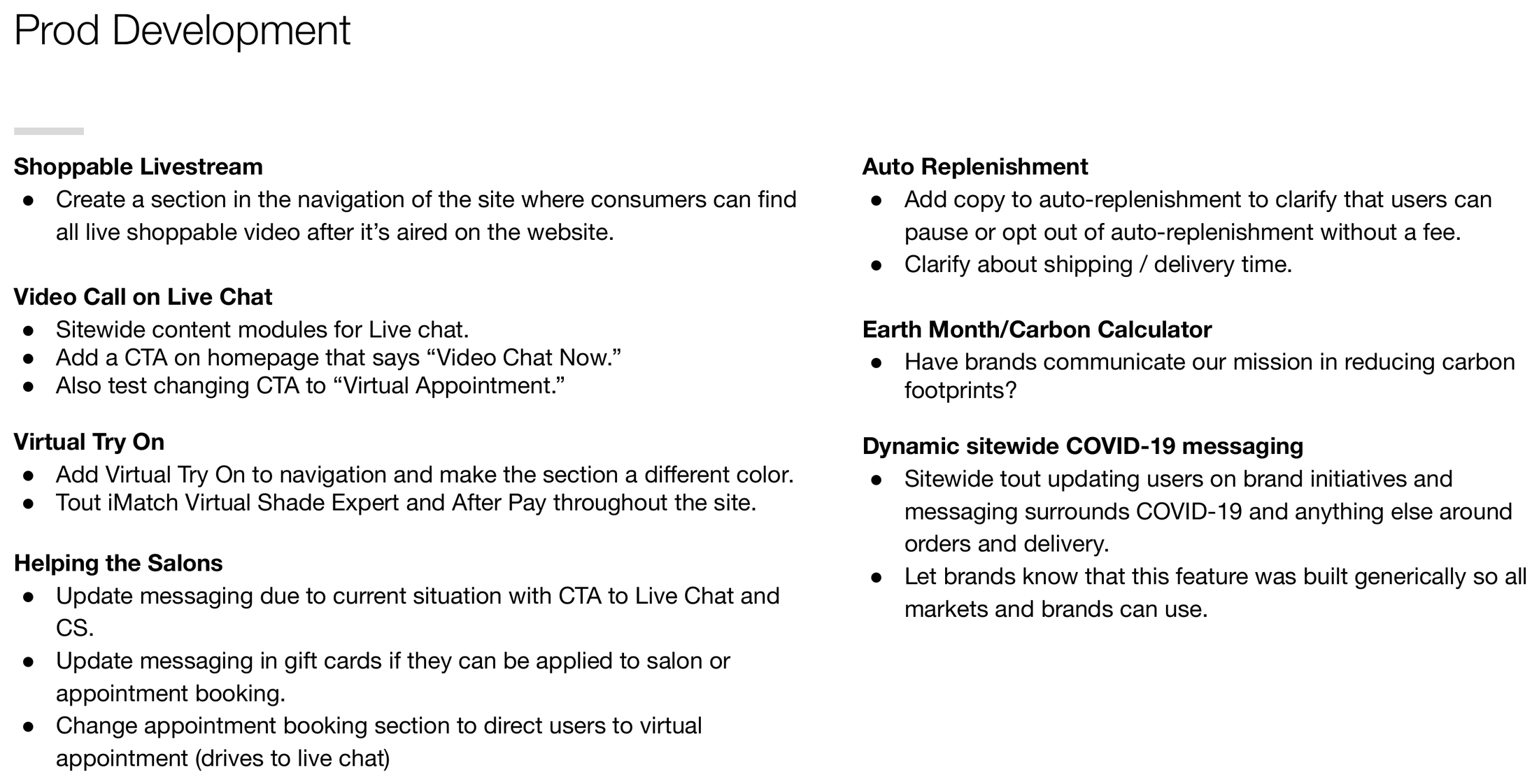
- Product development. Navigation changes, auto-replenishment copy, virtual try-on placement, sitewide COVID modules
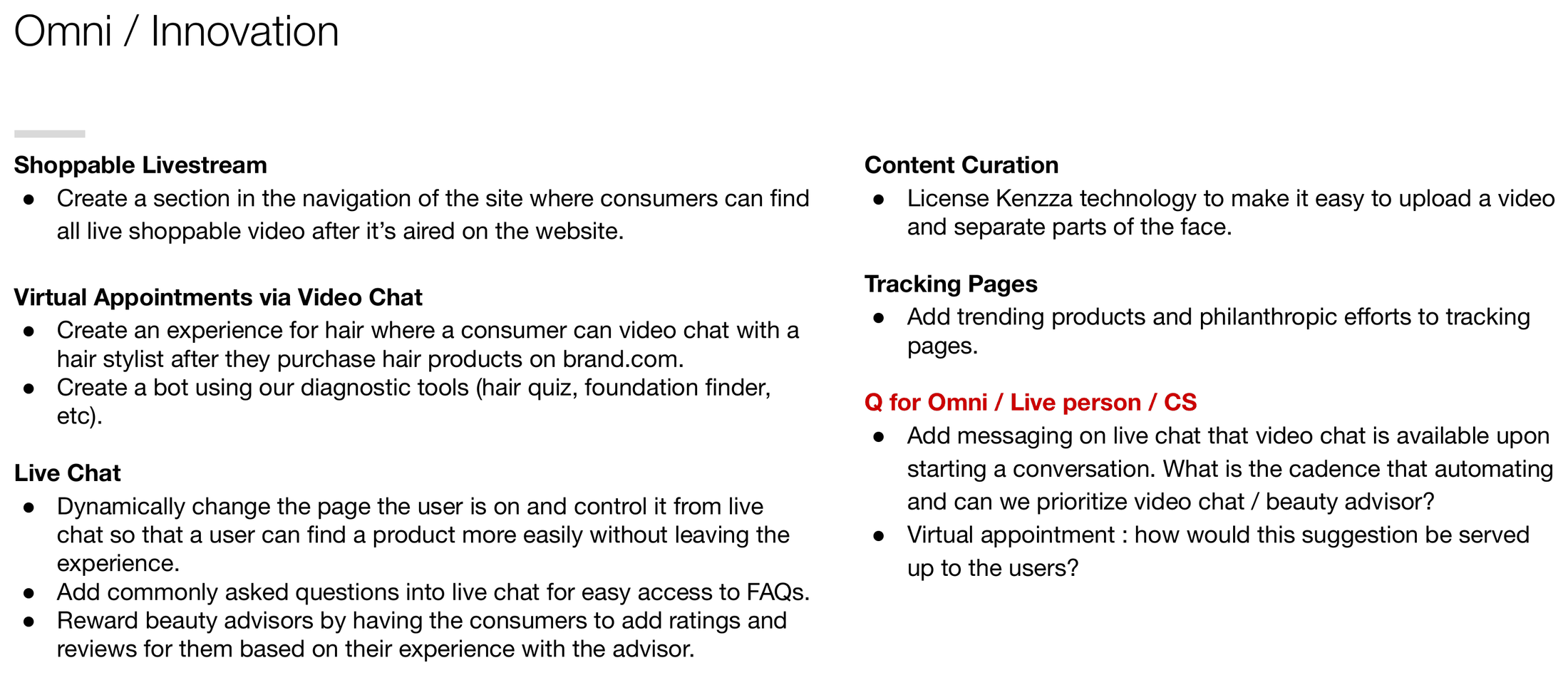
- Omni and innovation. Live chat behavior, video consultation for hair, diagnostic bots, content licensing
- Marketing and social. Feature awareness email, asset direction, sustainability and gift card pushes
Almost half of it could not
be shipped by one team
Routing each recommendation to the function that had to act on it produced the finding that mattered most. Of fourteen areas, six needed two functions moving together. Live chat was worthless unless marketing told anyone it existed. Virtual try-on needed a navigation change and a new asset direction, and neither team could do the other's half.
development
innovation
and social