02
Standardizing on-site messaging strategy
UX ResearchExperience StrategyProduct & Design LeadershipAI & Insight Systems
Methods
Evidence synthesis
Behavioral analysis
Heuristic analysis
Variant audit
Scoring rubric
Synthesized existing research rather than commissioning new work, then scored what it found.
Inputs and tools
Fullstory
Braze
UserTesting
21 secondary artifacts
40+ pop-up variants
217 insights and observations, distilled into 11 heuristics.
The problem
Clinique North America was seeing elevated frustration and bounce driven by inconsistent, overlapping on-site messaging. Pop-up variants were ungoverned, competing with site overlays and suppressing engagement.
My role
Led the research-driven audit and cross-functional alignment to standardize messaging logic, display rules, and governance across variants.
Approach
- Synthesized 21 secondary research artifacts
- Analyzed 217 insights and observations
- Mapped friction across mobile and desktop
- Distilled 11 synthesized heuristics
Data sources
- Fullstory
- Braze
- UserTesting
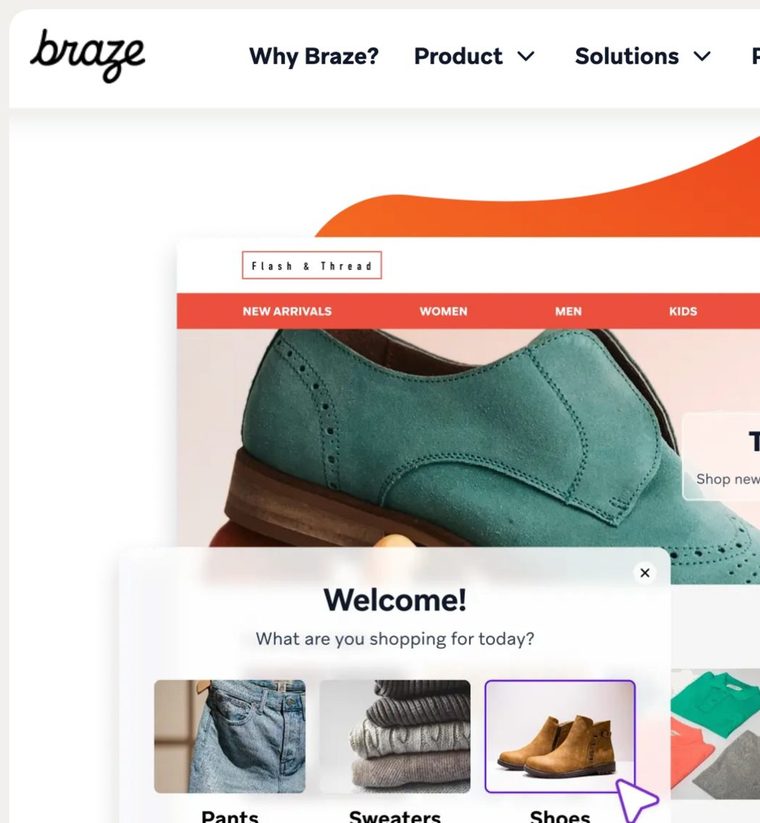
/ Insight
02 / Messaging governance
Behavioral analysis quantified frustration at scale and set global messaging strategy.
What the research found
- Pop-ups were the single largest driver of sitewide frustration
- 58% bounce rate on the Email and SMS welcome variant
- Overlay conflicts between Braze and LivePerson produced the highest friction of any interaction
What I drove
- Retired underperforming variants
- Established standardized timing, suppression, and close logic
- Defined a scalable messaging framework across the North America portfolio
- Aligned mobile and desktop interaction models
Uncoordinated messaging was not just inefficient. It was actively driving drop-off at scale.
/ Behavioral friction analysis
02 / Messaging governance
Bounce rate after
pop-up exposure
Source: Fullstory behavioral analytics, Clinique NA pop-up variants
Highest traffic loss
58%
Bounce on the Email and SMS welcome variant, the highest of any messaging surface
Strategic implication
- Overlapping variants were suppressing engagement rather than adding it
- High-friction welcome flows were the primary source of traffic loss
- Loyalty messaging performed best when contextually relevant
Pop-ups ranked as the highest friction driver relative to all other site experiences.
/ Governance model
02 / Messaging governance
From subjective critique
to a scored standard
I built a scoring rubric that translated behavioral friction and heuristic violations into quantifiable scores, prioritized by impact and effort.
How it was applied
- Audited 40+ pop-up variants across portfolio brands
- Scored each against four friction dimensions
- Identified systemic overlap, frequency abuse, and contextual misalignment
- Used weighted scoring to separate quick wins from structural fixes
Strategic outcome
- Shared evaluation language across UX, CRM, and marketing
- Reduced subjective design debate
- Enabled global standardization of messaging rules
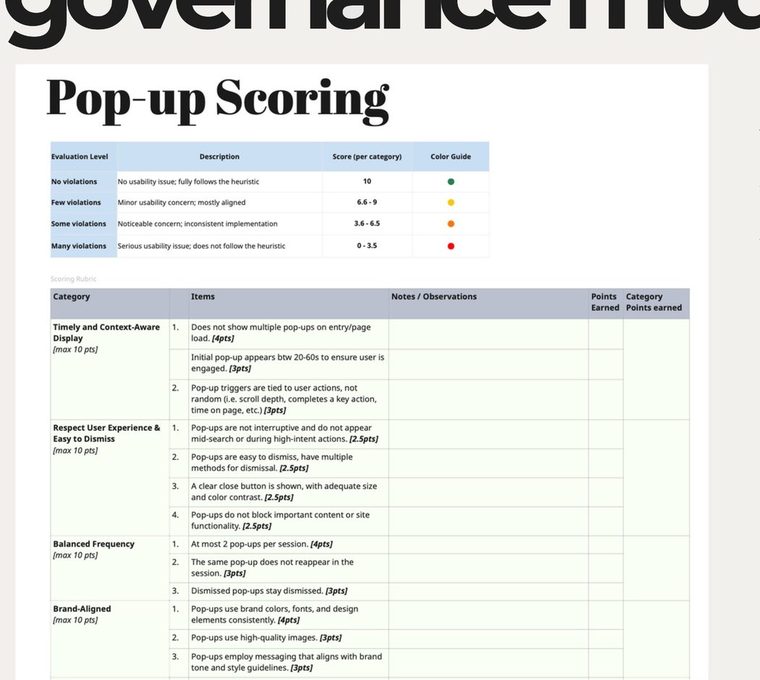
/ The standard
02 / Messaging governance
01
Suppression and priority logic
Suppress when higher-priority overlays are active: navigation, cart, virtual try-on
02
Eligibility and frequency
Frequency caps of one per day per user to reduce fatigue
03
Dismissal and exit behavior
Standardized close, outside click, and escape interactions
04
Contextual governance
Display rules aligned to page intent and user state
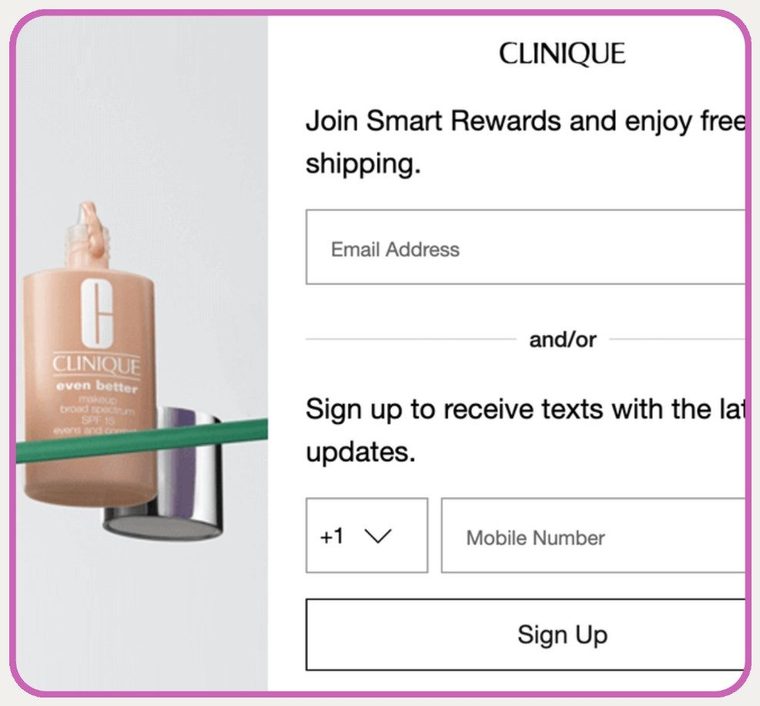
One governed module replaced a portfolio of competing variants. The rules travel with it.
/ Results
02 / Messaging governance
Governance reduced friction and improved engagement across prioritized variants.
Six-week optimization sprint · Phase 1 pilot, Clinique NA · 25 August to 25 September
Friction reduction
−16%
Behavioral friction across pop-up interactions
Largest gain
Desktop
Greatest friction reduction observed on the desktop experience
Adoption
7
North America brands adopted the framework as the white-label standard
The durable outcome was not the pilot. It was the standard that outlived it.