Generative AI search visibility
High-intent skincare queries surfaced in large language models were consistently favoring SkinCeuticals over Clinique, despite Clinique's larger market share and stronger brand equity. The business needed to know why, and what would change it.
Led the end-to-end analysis of AI search visibility on BrandLight, turning query data, content systems, and competitive benchmarks into structural gaps and opportunity areas. Ran two engagements: a head-to-head competitive audit for Clinique, and a defend-and-grow prioritization for Dr. Jart+, a brand with the opposite problem.
- Analyzed 100+ high-volume, AI-surfaced skincare queries
- Evaluated content systems across education, ingredients, and technical structure
- Assessed schema, hierarchy, and internal linking
- Ran competitive gap analysis against missed visibility opportunities
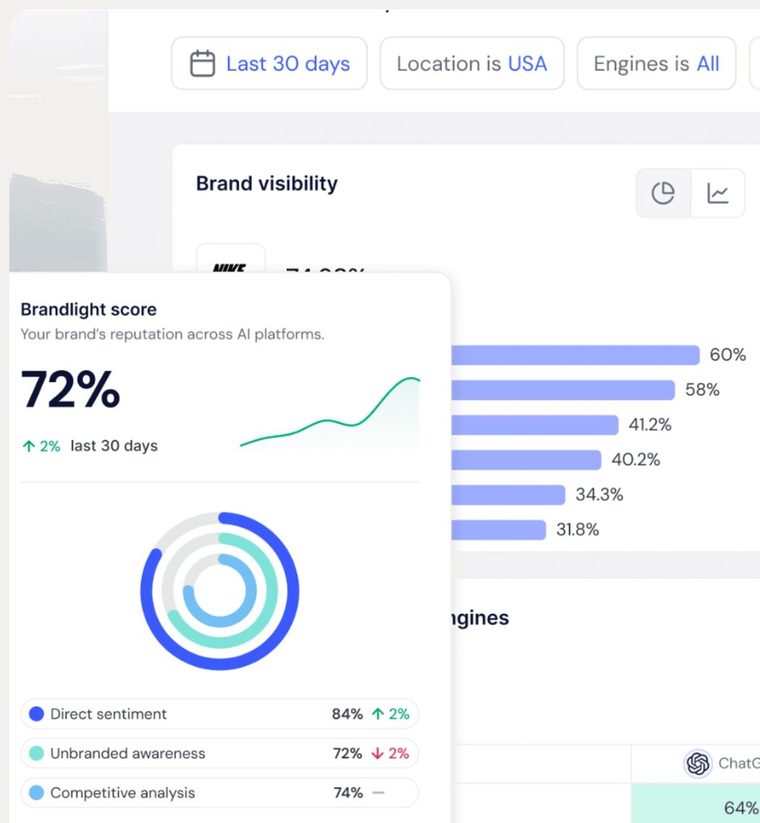
- BrandLight AI visibility and query analysis
- ChatGPT, Microsoft Copilot, Perplexity, Google AI Mode and Overview
Opposite problems, so the
method had to be different
Both ran on the same AI visibility platform in late 2025 and neither borrows the other's findings. One brand was invisible relative to its size. The other was far more visible than its size should allow. Those are not the same question, and answering them took two different research designs.
Clinique × SkinCeuticals
competitive audit
- The question. Why is a brand a fraction of our size winning the answers we should own
- The test. Binary presence. Six unbranded high-volume queries run across five engines, recording whether each brand was named at all
- The output. A four-dimension gap analysis and a content and schema programme to close it
- The position. Under-penetrated. Nine percent visibility on six percent share
Dr. Jart+ defend
and grow prioritization
- The question. How do we hold a position we did not earn through scale, before the engines refresh
- The test. Not presence but sourcing. For each high-importance query, was our own content what the engine used, and where did the answer place us
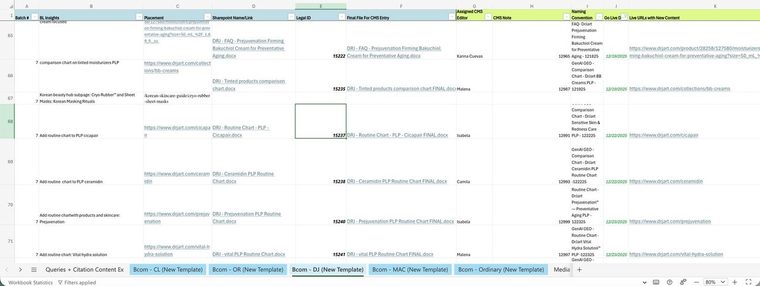
- The output. A page-level priority model splitting every asset into defend or grow, with the content type and placement named
- The position. Over-penetrated. Under one percent unit share against a roughly plus-thirty visibility gap
Clinique is underperforming in AI search despite strong brand equity.
- SkinCeuticals is consistently surfaced across high-value skincare queries. Clinique is largely absent from the same categories
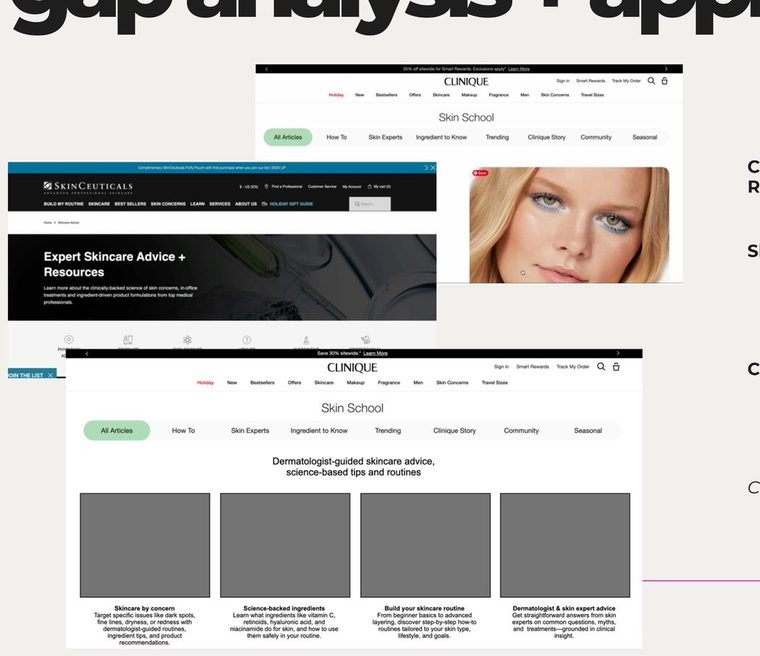
- SkinCeuticals leads with dermatologist-led positioning, ingredient specificity, and concentrations. Clinique's Skin School leans general and editorial
- Clinique's expertise exists but is diluted, embedded in imagery, or unstructured for retrieval
- Reframed the problem from a content gap to a systems design gap
- Defined a reusable content structure: what it is, what it does, who it is for
- Specified schema, heading hierarchy, and internal linking requirements
- Prioritized ingredient and concern hubs deep-linked to PDPs
A competitor a sixth the size,
holding more of the answer
On unbranded skincare intents, AI visibility and market share come apart. SkinCeuticals holds twelve percent of the visibility on under one percent of US skincare units. Clinique, at six percent share, holds nine. Penetration is what made this legible to leadership: what matters is not how visible you are, but how visible you are relative to what you already are.
Six questions worth up to
100,000 searches a month.
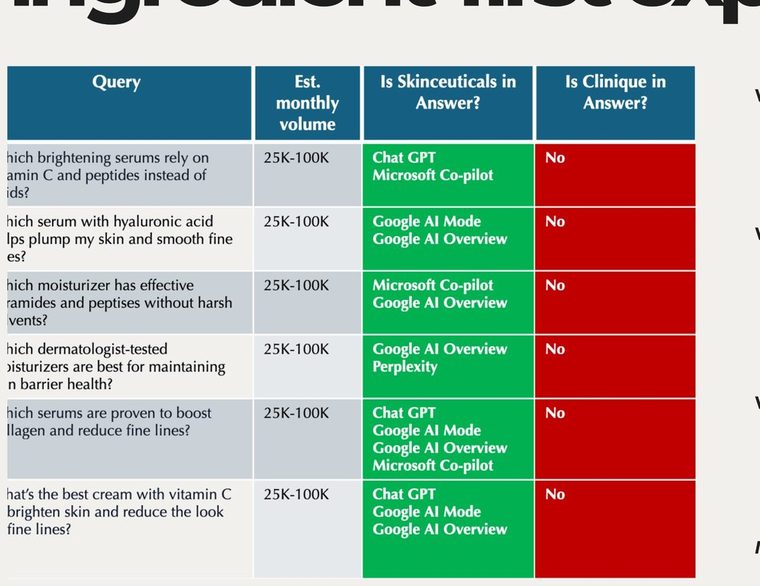
Clinique appeared in none.
Every one of these is unbranded, high volume, and squarely inside Clinique's stated expertise: ingredients, clinical testing, barrier health. A filled circle means the competitor was named in that engine's answer. The last column is Clinique.
Overview
AI Mode
Copilot
AI favors structured,
ingredient-first
expert content
- Ingredient-specific queries such as vitamin C and hyaluronic acid
- Problem-based queries such as fine lines and barrier repair
- Content with clear clinical framing and stated mechanisms
- Expertise exists but is not structured for retrieval
- Content leans lifestyle and editorial over clinical specificity
- Authority signals are diluted or embedded in images rather than text
The gap comes down to
three structural drivers
Expert framing
SkinCeuticals is explicitly dermatologist-led and science-first. Clinique implies credibility rather than stating it. AI prioritizes explicit expertise.
Content depth
Mechanism-driven content with deep internal linking versus lighter, less technical explanations. Depth is what lets AI retrieve and connect answers.
Structure
Clear heading hierarchy, FAQs, and schema versus a visual, editorial layout. Structure determines whether content is usable by AI at all.
Four moves to make expertise legible to AI.
Reframe Skin School
From general education to a dermatologist-guided authority destination.
Structure for retrieval
What it is, what it does, who it is for. Reusable across PDPs and AI answers.
Connect the ecosystem
Ingredient hubs and concern hubs with strong internal linking to product.
Signal authority explicitly
Dermatologist quotes, clinical proof, and testing language in text, not images.
The structural fix, shipped
The audit named the gap. A content engine closed it, running custom GPT workflows at roughly ten pieces per week per brand and cutting content production lead time by 90%.
The opposite problem, and it
needed the opposite strategy
Dr. Jart+ has under one percent of US skincare units and shows up in AI answers far more than that predicts, a gap of roughly plus thirty. That is an asset nobody bought. The engines reach for the brand on unbranded need-states like sensitive skin, redness, and hydration, because the product-problem fit is clean and the third-party citations are credible. None of it is durable.
- Clear product-problem fit in popular intents, redness and soothing in particular
- Concentrated evergreen how-tos and FAQs phrased the way people ask
- High-authority third-party citations and reviews the models already trust
- Naming, ingredients, and benefit language consistent with how queries are worded
- Algorithm updates, when a competitor publishes the better answer
- Content decay, where stale pages get deprioritised for fresher sources
- Competitor catch-up from brands currently under-represented
- Citation drift, if the third-party sources doing the work stop updating
Hold the queries the brand already wins. Keep the top pages current, refresh them before a competitor does, keep the third-party citations alive, and track citation drift per engine so a softening position gets diagnosed rather than discovered.
Turn visibility into demand. Shorten the path from being mentioned in an answer to being purchasable: answers linking to product and retailer pages, and deep links to the exact shade or size rather than a category landing.
Being mentioned and being
the source are different wins
For a brand already present, presence is the wrong measure. The query-level test asked something harder: when the engine answered, did it use our content, what was the sentiment, and where in the answer did we land. Two high-importance queries, near-identical on the surface, came back opposite.
Would Dr. Jart+ be too rich for someone used to light Korean moisturizers?
Present across engines, but ChatGPT did not draw on brand content and sentiment came back neutral. A competitor was named outright in Google AI Mode. The barrier was a perception of texture and weight, with no skimmable proof that lighter options exist.
Should I buy Dr. Jart+ moisturizer or try Korean hydrating creams instead?
Brand content used in several engines with mostly positive sentiment, but the placement was mid-answer with two competitors alongside. Winning the citation and losing the position are not the same outcome.
Thirteen dashboards, and
a sentence for each one
The visibility platform arrived with more views than any brand team was going to read. I wrote the reference guide translating each one into the question it answers and the action to take when the number moves. The tool is not the deliverable. The interpretation is.